

Can You Use AI to Virtually Stage Your Home? What to Know Before You Try
/Yes, AI can furnish a photo of an empty room in minutes, and it is a fair way to test ideas. But when the image goes on a listing, any error is yours, and buyers notice errors. If the staging is meant to help sell the property, the safer route is to send us your photos and have our team stage them.
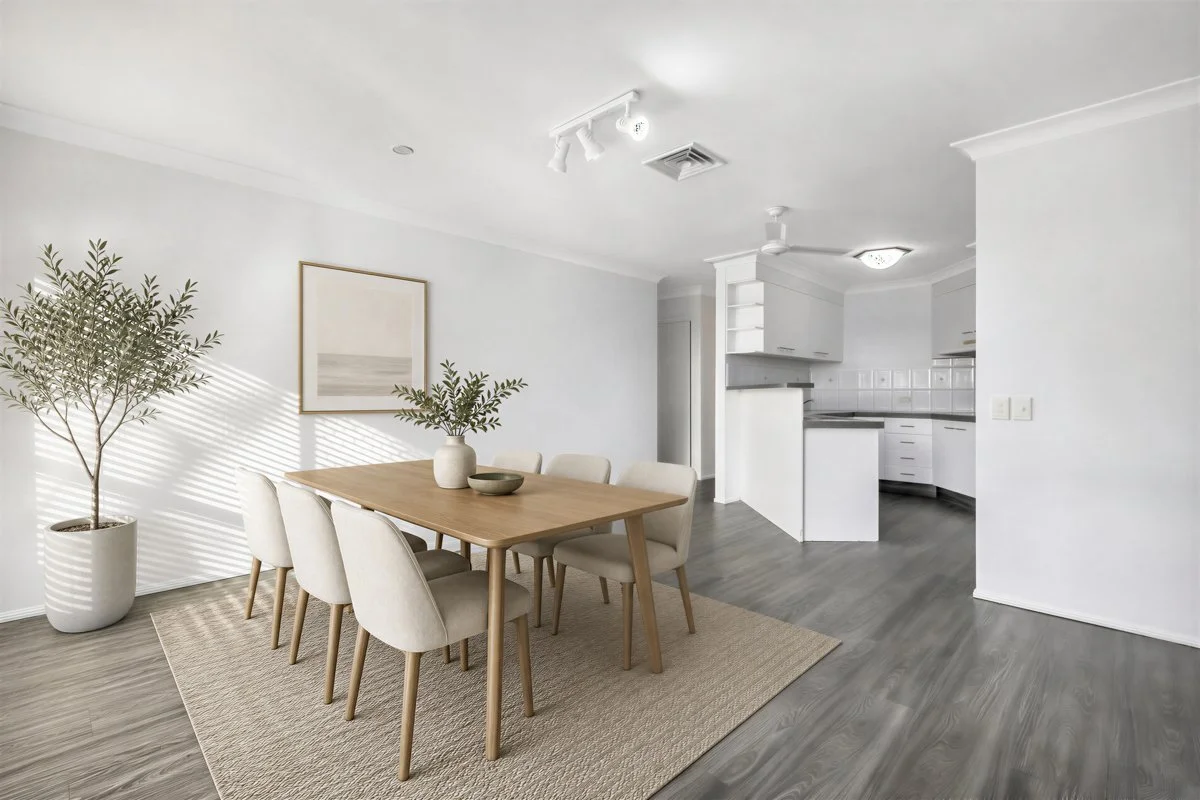
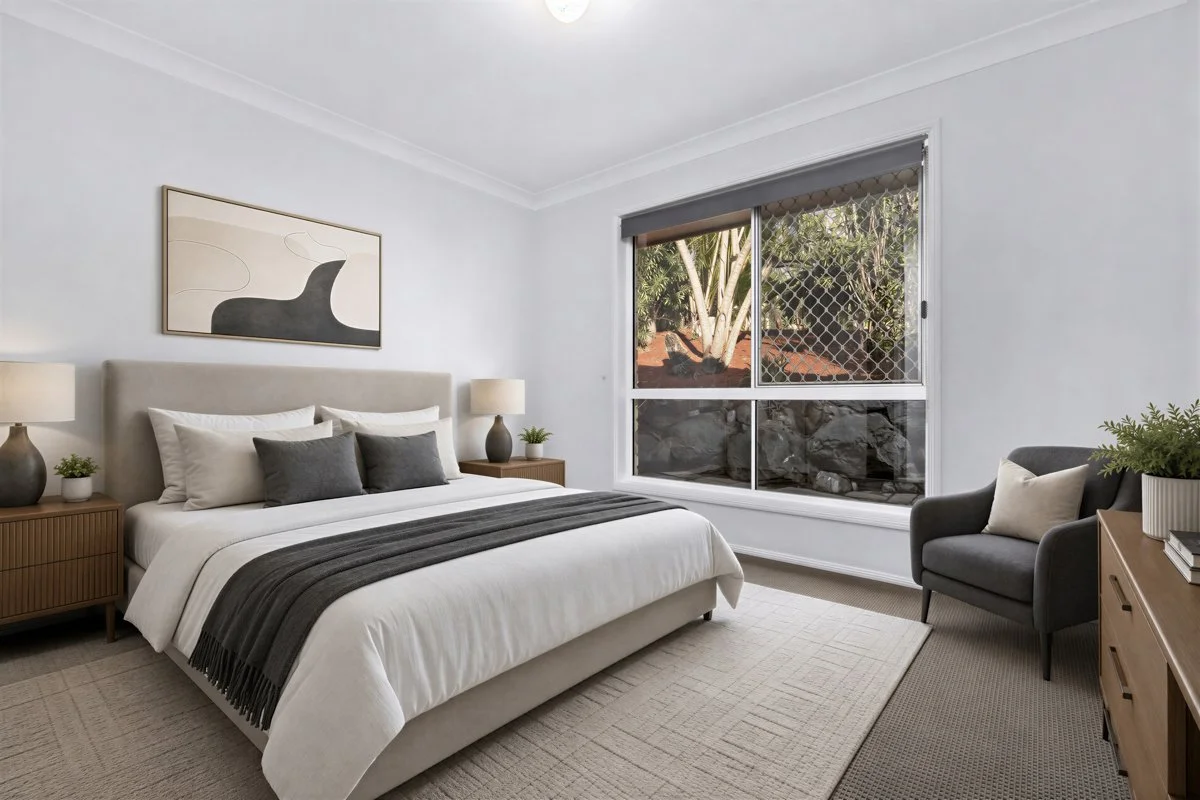


Want it done without the retries? Request virtual staging and we will stage the rooms that matter.
What can AI virtual staging do for you?
Free AI tools and design apps can add a sofa, a bed or a dining set to an empty room. They are quick, and they are useful for working out how a space could be furnished. That is where they are strongest: testing ideas, not producing the images a buyer will judge your property by.
Where does DIY AI staging go wrong?
The problems show up when buyers look closely, and they do.
Warped geometry. Walls, skirting and door frames can bend or shift when the tool redraws the room.
Scale and placement. A sofa that is too big, or a bed floating in front of a window, tells buyers something is off.
Light and shadow. Furniture that doesn't match the room's light looks pasted in.
Changed features. Some tools quietly alter windows, flooring or fittings. If the room in the photo is not the room buyers see, that is your problem.
Inconsistency. Each image is generated separately, so style and furniture can change from room to room.
Wasted time. You write the prompts, check every detail and start again when it is wrong. Nobody else is accountable for the result.
What does a professional service do differently?
| DIY AI tool | Digital 1 QLD virtual staging | |
|---|---|---|
| Starting point | Whatever photo you have | Our own professional photo of the room |
| Realism | Varies by image and prompt | Checked and corrected by a person |
| Consistency | Often differs between rooms | One style across the listing |
| Accuracy to the room | You check every detail | Reviewed against the property |
| Your time | Prompts, retries and checking | Send the photos, review the result |
Why does the starting photo matter?
Staging is only as good as the photo beneath it. A dark, tilted or poorly exposed photo gives a poor result however clever the software is. Because we shoot the property, the staged image starts from a bright, level, accurate photo of the real room, so the finished image matches what buyers will see on the day. If you already have a real estate photographer, we can work from your files; otherwise, book the shoot and the staging together.
How should staged photos be labelled?
Tell buyers. Mark staged images as virtually staged, and show the original empty photo alongside when you can. Photos must not mislead buyers about the property, so make the staging obvious. Our guide to editing real estate photos covers what is and isn't allowed.
A quick check if you still want to try it yourself
Are the walls, doors and windows exactly as they are in real life?
Is the furniture the right size for the room?
Do shadows and light match the rest of the photo?
Does every room use a consistent style?
Is the image labelled as virtually staged?
Is the original photo available to buyers?
If any answer is no, fix it or hand it to us.
Let us stage it
Our virtual staging homes service takes the guesswork out of it: one style across the listing, rooms that match the property, and finished images you can use straight away.
Frequently Asked Questions
Can I use ChatGPT or Canva to virtually stage my home? Yes, you can furnish a photo with these tools. Check it carefully for distorted features and label it as virtually staged, or have us do it.
Is DIY virtual staging good enough for a private sale? It can be for a single room if the result is realistic and clearly labelled. For a full listing, consistency across rooms is the common problem.
Do I have to tell buyers a photo is virtually staged? Labelling is the safe approach. Misleading buyers about a property is the risk, so show that the furniture is virtual.
What is the best photo to start from? A bright, sharp, level photo of the empty room, which is what we shoot.